







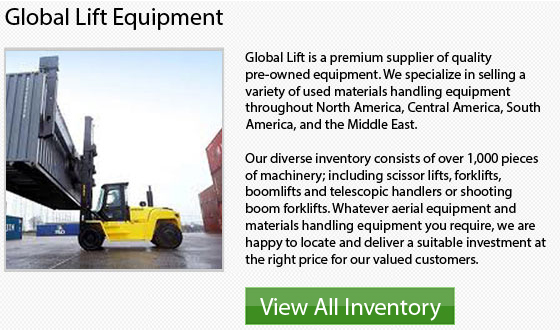
Using a Regular Counterbalance lift truck
1 Before operating the equipment, carry out a pre-shift check. OSHA guidelines do state that pre-shift checklists need to be performed each day or each shift. Each and every different equipment and its attachments has its own checklist listing emergency brakes, lights, brakes, steering, horn, controls and safety features.
2 When starting up the machinery and check the controls, it is vital to ensure that the seatbelt is fastened and the seat has been adjusted for your maximum comfort. Look under the machine after you move it for any signs of leaks. The operation of every kind of lift truck is different.
3 The basic operation of a machinery is basically compared to a standard vehicle. The forklift has a rear end swing of the forklift happens as the truck steers utilizing its rear wheels. Forgetting this fact is a main reasons for injuries and accidents to workers. The almost 90-degree turn from the front wheels should be done with utmost caution. These top-heavy equipment have a high center of gravity even without a load. When moving or lifting a load this top-heaviness is exacerbated.
4 Keep forks close to the floor when traveling. Utilize care when approaching loads. Be certain the forks line up properly with the pallet. Lift the load only as high as is necessary, tilting it back to help stabilize the machinery. Drive backwards only if the load is very bulky that it interferes with driver vision.
5 Before loading and unloading, check the wheels on trailers/trucks. When lifting a load, it is not advised to travel on slopes. The machinery is susceptible to tip-overs on a slope. When driving on a slope is unavoidable, always drive up the slope and back down. The load should be kept on the uphill side of the truck.
6 The driver should be definitely in control all the time. The main reason for operator injuries is tip-over. The operator must never try to jump out of the truck in the event of a tip-over. The safest method is to lean away from the direction of fall while gripping the steering wheel and bracing your feet.